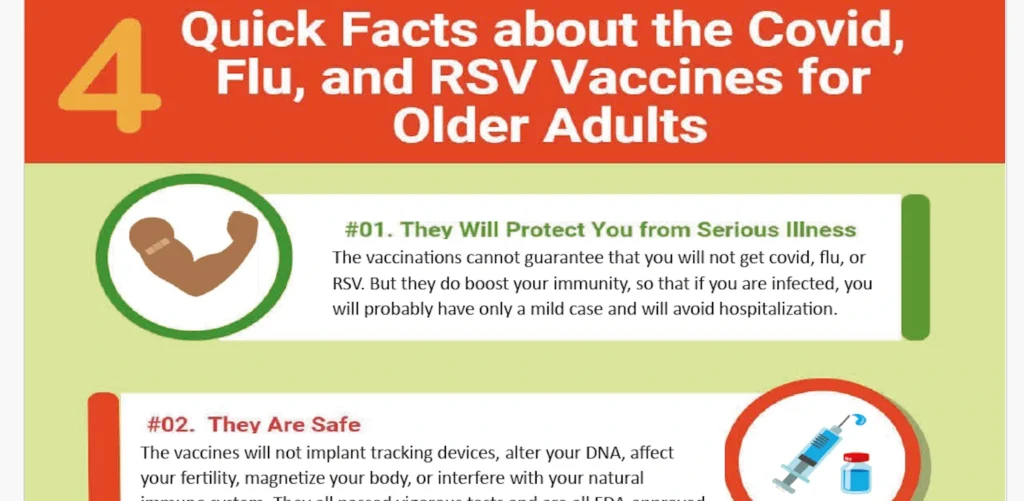
Join us in addressing misinformation, uncertainty, and questions about the latest vaccines that help protect older adults from three serious viruses: influenza, Covid-19, and RSV (Respiratory Syncytial Virus)
NCBA applauds your commitment and is honored to join you in this important effort to support the health, safety, and well-being of older adults.
We invite you to watch our brief video and download the free toolkit to use and share as you wish.
Use this tool to find places near you that offer vaccines
Respiratory Season & You
Respiratory season spans the months when viruses that affect our lungs and airways—like influenza (flu), respiratory syncytial virus (RSV), and COVID-19—tend to spread more actively. With overlapping illnesses, increased indoor gatherings, and lower ventilation, it becomes especially important to be prepared.
CDC expects the upcoming fall and winter respiratory disease season in the United States will likely have a similar number of combined peak hospitalizations due to COVID-19, influenza, and RSV compared to last season. CDC will update this outlook every two months throughout the season and as warranted by changes in the trajectories of any of the three diseases.
Vaccines
Getting the right vaccines timely is one of the strongest protections you have during respiratory season.
Vaccines prepare your immune system to fight viruses and reduce your risk of hospitalization or death. CDC
For example: the flu vaccine, the COVID-19 vaccine, and RSV vaccines are recommended in appropriate age or risk groups. CDC
CVEEP provides clear guidance on who should get what vaccines and when: for instance, adults 50 + and infants with certain risks for RSV. CVEEP
Why act now? Viruses often surge in fall and winter; getting vaccinated before spread peaks helps.
Tip
Speak with your healthcare provider about which vaccines you need this season, and whether you can combine visits (e.g., flu + COVID) safely and conveniently.
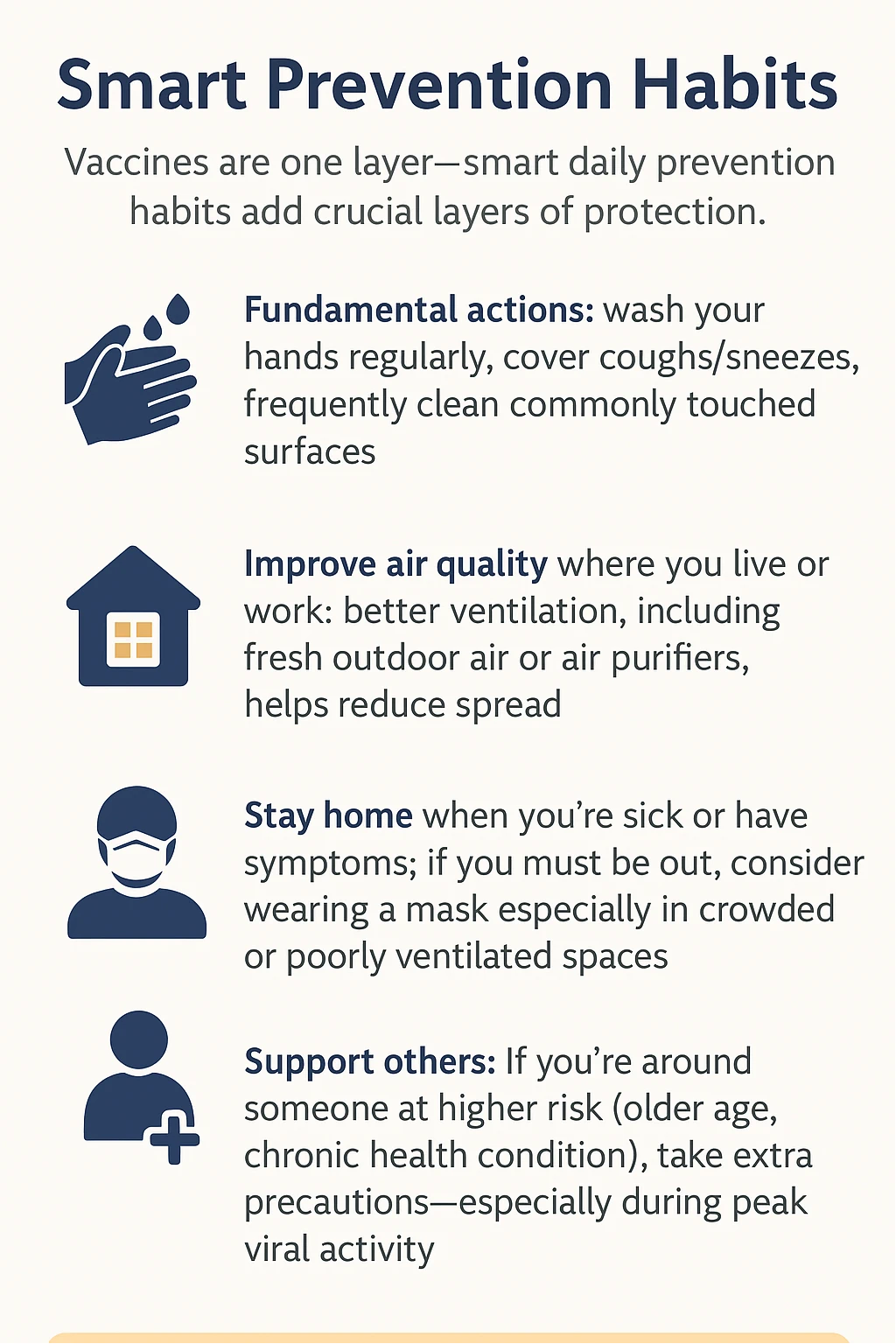
Small actions make a big difference.
Use this guide to learn easy prevention habits you can follow every day to help keep your community safer.
Knowing Symptoms
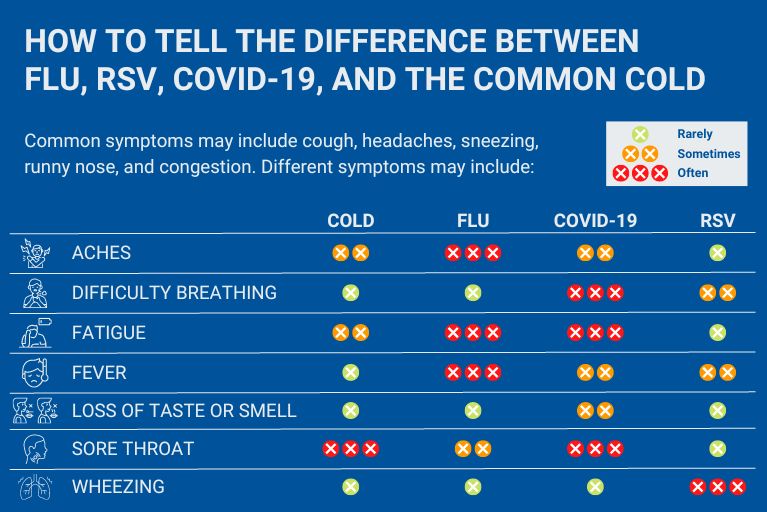
Many respiratory illnesses have common symptoms such as fever, cough, sore throat, runny or stuffy nose, body aches, headache, chills, and fatigue. Identifying illnesses early helps ensure you receive the right medications to feel better faster and prevent serious complications. If you have a fever, cough, sore throat, body aches, fatigue, or congestion, contact a healthcare professional immediately to determine whether testing or treatment is appropriate. CDC
Know Your Risk
Understanding your risk helps you decide what extra steps you might need.
Risk factors include age (especially infants, older adults), chronic lung or heart conditions, weakened immune systems, pregnancy, high-exposure settings (work, crowds). CDC
Check local data: The CDC publishes weekly updates on respiratory virus activity in different regions so you can know if your community has higher levels of disease. CDC
If you fall into a higher-risk category, you may consider additional prevention layers: masking, delay in non-essential gatherings, earlier vaccination. CDC
Tip
Use a simple checklist: “Am I in a higher risk group?” “Are people around me higher risk?” “Is a virus surge happening locally?” If any answer is “yes”, take extra caution.
Resources and Downloads
Toolkit
We encourage you to download and share any these materials with family, friends, associates, members, and clients
JOHN WHYTE: Welcome, everyone. You’re watching “Coronavirus in Context.” I’m Dr. John Whyte, the Chief Medical Officer at WebMD.
COVID has impacted so many aspects of our lives. But today, I want to spend some time talking about how it’s impacted communities of color. So to provide some insight, I’ve asked my friend Karyne Jones. She’s the president and CEO of the National Caucus and Center on Black Aging. Karyne, welcome back............
pages to simplify arrangements. Version A is for organizations that provide transportation assistance. Version B is for organizations that provide appointment assistance only.
pages to simplify arrangements. Version A is for organizations that provide transportation assistance. Version B is for organizations that provide appointment assistance only.